
Houston Trespassing Defense Attorney
Home / Practice Areas / Criminal Defense / Trespassing
Practice Areas
Experienced Criminal Defense Attorney Fighting Trespassing Charges in Houston, TX
Trespassing allegations can escalate quickly, and being charged with a crime tied to property or private property access demands immediate support from a Houston trespassing defense attorney who understands the stakes. When you face criminal trespass charges in Houston TX, your freedom, your future, and your permanent record are all on the line, making experienced legal representation essential from the start.
Keith Jackson, Attorney and Counselor at Law PLLC, is an experienced criminal defense attorney who defends clients throughout Harris County, Fort Bend County, Montgomery County, Galveston County, and Southeast Texas. He provides aggressive criminal defense for individuals facing trespassing offenses under Texas law, from Class C, Class B, and Class A misdemeanors to cases involving a deadly weapon, intent to commit another crime, or conduct that may be elevated to a state jail felony, third degree felony, or second degree felony.
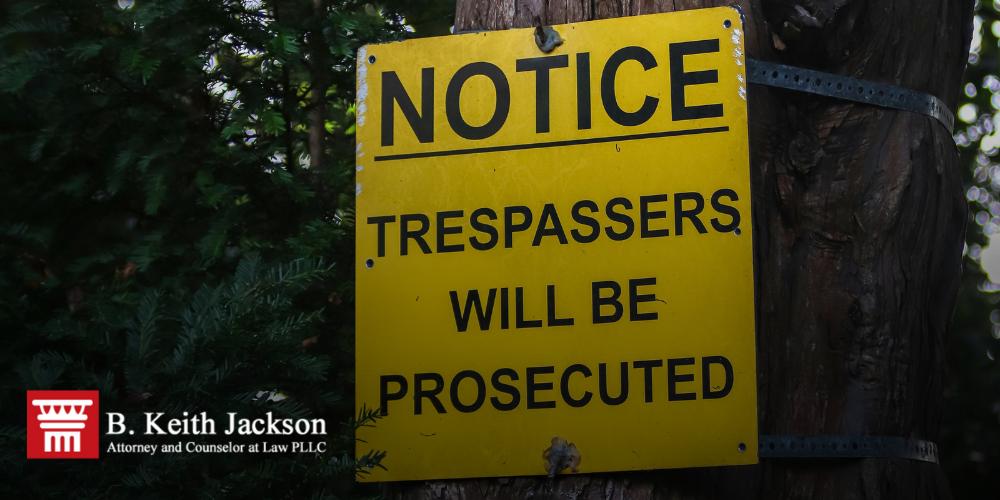
Attorney Jackson examines the prosecution’s case, reviews evidence, and builds a tailored defense strategy by challenging improper notice, lack of effective consent, questions of apparent authority, or other weaknesses in the State’s allegations. His law firm assists clients at every stage of the legal process, offering confidential consultation and immediate guidance to protect your rights, your criminal records, and your future opportunities.
If you are facing trespassing charges, contact Houston criminal defense attorney B. Keith Jackson today at (281) 545-5020 or reach out online to discuss your legal options and begin building a strong defense.
What Is Criminal Trespassing?
Criminal trespass under the Texas Penal Code (§ 30.05) occurs when a person enters or remains on property without effective consent from the property owners or apparent authority to do so. Texas law recognizes trespassing offenses on various types of property, including private property, commercial property, agricultural land, and critical infrastructure facilities. The crime requires proof that the person received proper notice not to enter, which can include oral or written communication, visible signs, purple paint marks identifying trees or posts, or fencing designed to exclude intruders.
Understanding the specific elements the prosecution must prove becomes essential when building an effective defense against trespassing charges. For example, a person who walks onto agricultural land marked with identifying purple paint marks may face criminal trespass charges if they were previously warned not to enter, while someone who unknowingly stepped across a poorly marked boundary may not meet the legal threshold for a conviction.
Types of Criminal Trespass Charges in Texas
The Texas Penal Code classifies criminal trespass into different categories based on the circumstances of the offense, the type of property involved, and whether aggravating factors exist. The classification determines the potential penalties, jail time, and long-term consequences on your permanent record. An experienced criminal defense attorney evaluates the specific facts of your case to identify weaknesses in the prosecution’s case and pursue the most favorable outcome.
Class C Misdemeanor
A Class C misdemeanor is the least serious trespassing offense and typically involves entering or remaining on property after receiving oral or written notice to depart. Common examples include remaining in a parking lot after being asked to leave, entering an empty lot without permission, or failing to exit the property when the owner requests it.
This misdemeanor, punishable only by a fine, carries no jail time but still results in a criminal conviction on your record. Even though prosecutors may treat Class C offenses as minor, securing legal representation helps protect your rights and may result in dismissal or deferred adjudication.
Class B Misdemeanor
Circumstances elevate trespassing charges to a Class B misdemeanor when a person enters property with clearly posted “No Trespassing” signs, identifying purple paint marks, or other proper notice designed to exclude intruders. This classification also applies when someone enters agricultural land, a critical infrastructure facility, or a Superfund site without the property owners’ effective consent.
A Class B conviction carries penalties of up to 180 days in jail and fines of up to $2,000, making it significantly more serious than a Class C charge. A Houston criminal defense attorney can challenge whether proper notice existed or whether you had apparent authority to enter the property.
Class A Misdemeanor
Trespassing becomes a Class A misdemeanor when aggravating circumstances exist, such as carrying a deadly weapon while trespassing, entering a habitation or shelter center, or trespassing at a critical infrastructure facility with intent to commit a crime. This classification also applies when emergency medical services personnel or other protected individuals are on the property performing their duties.
A Class A misdemeanor, punishable by up to 1 year in jail and fines up to $4,000, is a serious criminal charge that requires immediate legal representation. An experienced criminal defense attorney examines whether the prosecution can prove intent and whether lawful discharge of duties or exigent circumstances provide a valid defense.

What Is the Punishment for Criminal Trespass in Texas?
Here is how criminal trespass penalties work in Texas:
- Class C misdemeanor – Fines only, no jail time. This is the lowest-level offense for trespass under certain conditions.
- Class B misdemeanor – Up to 180 days in jail and fines up to $2,000. This applies to many standard criminal trespass cases.
- Class A misdemeanor – Up to 1 year in county jail and fines up to $4,000 when aggravating factors apply (for example, trespassing on critical infrastructure, habitation, or while carrying a deadly weapon).
- Felony-level trespass – Under certain aggravating circumstances (for example, trespass committed during a separate felony offense), charges can escalate beyond misdemeanors to a third degree felony.
- Additional consequences beyond penalties – Even a misdemeanor conviction creates a permanent record, which can affect your employment opportunities, housing, professional licensing, and future background checks.
Because penalties vary so widely depending on the property, notice, and other factors, a criminal trespass charge in Houston or surrounding counties can affect your record and future in serious ways.
Common Defenses Against Criminal Trespass Charges
A criminal defense attorney can challenge trespassing charges by demonstrating a lack of proper notice, such as absent or inadequate signage, missing purple paint marks, or insufficient fencing on the property. Consent or permission from property owners or someone with apparent authority to grant access provides a complete defense to criminal trespass charges under Texas law.
Mistaken identity, misunderstanding of property boundaries, or confusion about where private property begins can negate the intent element required for conviction. Additional defenses include proving you had a lawful right to be on the property as a tenant, invitee, contractor, or person with exigent circumstances requiring entry. An attorney also examines whether law enforcement committed procedural errors, violated your rights, or lacked sufficient evidence to prove every element of the offense beyond a reasonable doubt.
Why You Need a Houston Criminal Trespass Lawyer
A skilled Houston criminal defense attorney can be the difference between a dismissed case and a permanent mark on your criminal records. Attorney B. Keith Jackson investigates every detail surrounding your arrest, reviewing evidence such as witness statements, surveillance footage, and property records to identify weaknesses in the prosecution’s case. When inconsistencies or lack of proper notice appear, he uses them to challenge the allegations and protect your rights.
Attorney Jackson also negotiates directly with prosecutors to pursue reduced charges, favorable plea agreements, or complete dismissal when the evidence does not support a conviction. He guides clients through the entire legal process from the first court appearance to trial, ensuring your constitutional rights remain protected at every stage. Securing legal representation early helps safeguard your reputation, prevents damaging statements to law enforcement, and gives you the strongest possible opportunity to keep criminal charges off your permanent record.
Facing Criminal Trespass Charges in Houston? Call B. Keith Jackson, Attorney and Counselor at Law PLLC
Trespassing charges move fast in Texas, and delays can make it harder to protect your rights, freedom, and future from the serious consequences of a criminal conviction. An experienced criminal defense attorney like B. Keith Jackson can immediately step in to challenge weaknesses in the prosecution’s case, prevent damaging statements to law enforcement, and work to secure a dismissal, reduced charges, or an acquittal before your criminal records are affected. Early legal intervention is one of the most important factors in achieving a favorable outcome under Texas law, especially when your reputation and long-term opportunities are at risk.
Contact B. Keith Jackson, Attorney and Counselor at Law PLLC, at (281) 545-5020 or online for a confidential consultation and begin building a strong defense with a trusted Houston trespassing defense attorney today.

Contact a Reliable Houston Attorney for Assistance with Your Civil or Criminal Case
Whether you are facing criminal prosecution or embroiled in a complicated civil dispute, a diligent lawyer can help you reach the best possible solution to your case. You can be confident I will not back down in standing up for your rights against tough opposition.